For schools
We bring the programme. We handle the paperwork.
First aid, prevention and learning by doing. The school provides a room and a timetable; we take care of the rest. There are four routes to the sessions. Pick a line and see where it goes.
- You write to us
- We choose a programme
- We write the application
- The school says yes
- Local government decides
- We run the sessions
- We report back
- Who pays
- Local government or another grant-maker, such as the Małopolska Region.
- What the school does
- Agrees to take part, provides a room and a timetable. After the sessions, the school issues a certificate with the number of pupils.
- What we do
- We write the application, run the sessions, account for the grant and submit the report.
- Time
- Depends on the grant competition's deadlines. A small grant is funding of up to PLN 20,000, without an open competition.
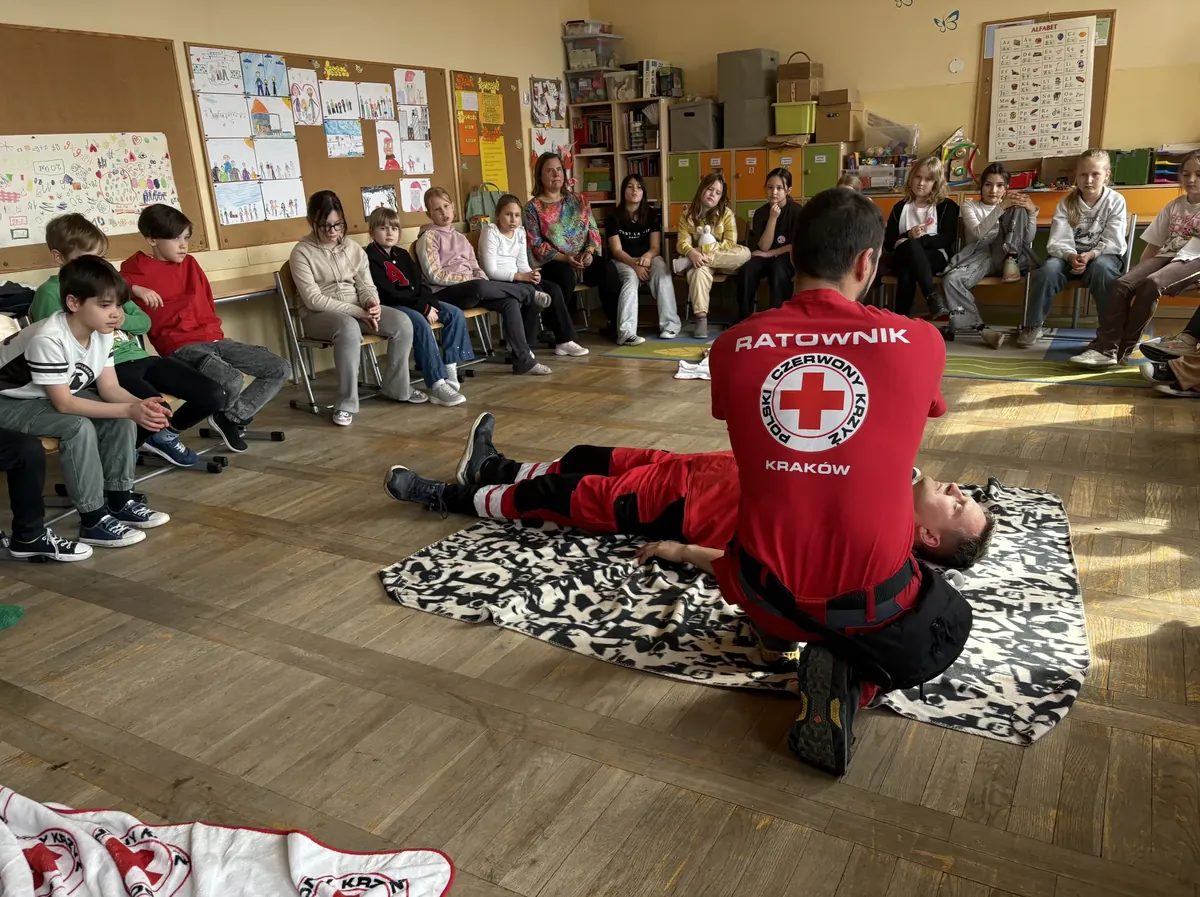
We've done this beforeMali Ratownicy at Jagiełło, at Władysław Jagiełło Primary School No. 21 in Kraków: 290 pupils, a grant from the Małopolska Region.
- You write to us
- We choose a programme
- We look for a company
- A company pays
- We run the sessions
- We report back
- Who pays
- A company that wants to support children's education.
- What the school does
- Agrees to take part, provides a room and a timetable.
- What we do
- We find a partner, agree the scope with them and account to the company.
- Time
- Depends on the company. We agree it up front, before we start.
We've done this beforeGirlsGetSET with Baker Hughes: Artur Grottger Primary School No. 106 in Kraków in 2025, Starachowice in 2026.
- You write to us
- We choose a programme
- We work out the cost
- You pay at cost
- We run the sessions
- We report back
- Who pays
- The school or the parents' council.
- What the school does
- Approves the cost estimate and pays against an invoice.
- What we do
- We work out the cost, run the sessions and issue an invoice.
- Time
- The fastest route: we start as soon as we agree a date.
We've done this beforeMłodzież i dzieci bez ryzyka at Janusz Korczak Primary School in Starachowice, March 2026: the school paid for the sessions.
- You write to us
- We choose a programme
- We rent a room
- Parents sign up
- Parents pay in advance
- We run the sessions
- We report back
- Who pays
- The parents of the children who come to the sessions.
- What the school does
- Rents the foundation a room after lessons and helps us reach parents, for example through Librus (the school's e-register).
- What we do
- Room hire, sign-ups, terms and parental consent, instructors, materials and payments.
- Time
- Parents pay a month in advance. The notice period is one month.
We've done this beforeStrefa Rozwoju runs at Artur Grottger Primary School No. 106, Władysław Jagiełło Primary School No. 21 and Henryk Sienkiewicz Primary School No. 36 in Kraków.
- 4
- schools where we run sessions
- 1,009
- people trained in first aid across three editions
- 283
- pupils, teachers and parents in our prevention programme at Artur Grottger Primary School No. 106 in Kraków
- 83
- children in Strefa Rozwoju in 2026/27
Paid public benefit activity
We charge only what the sessions cost. We don't make money from schools.
That's how paid public benefit activity works. Article 9 of the Polish Act on Public Benefit Activity and Volunteering says the fee may not be higher than the cost of the activity. We run it in line with the foundation's statute (§ 3(2)) and keep separate accounts for it.
What this means for the school
You pay for the cost, not for a margin.
- 1
We work out what the sessions cost
Instructors, equipment, materials and travel. Nothing more.
- 2
The school or the parents' council pays
Against an invoice. In Strefa Rozwoju, the parents of the children who attend pay.
- 3
The whole fee goes on the sessions
The money from fees goes back into the programme: on instructors and materials.
Grants
We write the application. The school confirms it will take part.
When local government funds the sessions, the school pays nothing. After the sessions, the school issues a certificate with the number of pupils, and we account for the grant and submit the report.
- Mali Ratownicy 2.0Artur Grottger Primary School No. 106 in Kraków391 pupilscompleted
- Młodzież i dzieci bez ryzyka (Risk-Free Children and Teens)Artur Grottger Primary School No. 106 in Kraków283 peoplecompleted
- Mali Ratownicy at JagiełłoWładysław Jagiełło Primary School No. 21 in Kraków290 pupilscompleted
- Mali Ratownicy 3.0Artur Grottger Primary School No. 106 in Krakówplanned: 250+ peopleon its way, until 18 December
Four projects funded by grants from the Małopolska Region in 2026. The schools didn't pay a penny for them.
What we can do at your school
Four kinds of sessions. Choose one, or all of them.
We tailor every programme to the grades and the timetable.

First aid · during lessons
Mali Ratownicy (Little Lifesavers)
First aid for every class. Polish Red Cross instructors teach CPR, how to use an AED, how to call for help and what to do when someone is choking, cut or burnt. Every child practises on a manikin themselves. From edition 3.0, school staff can be trained too.
Who forAll grades of primary school
Programme detailsPrevention · during lessons
Młodzież i dzieci bez ryzyka (Risk-Free Children and Teens)
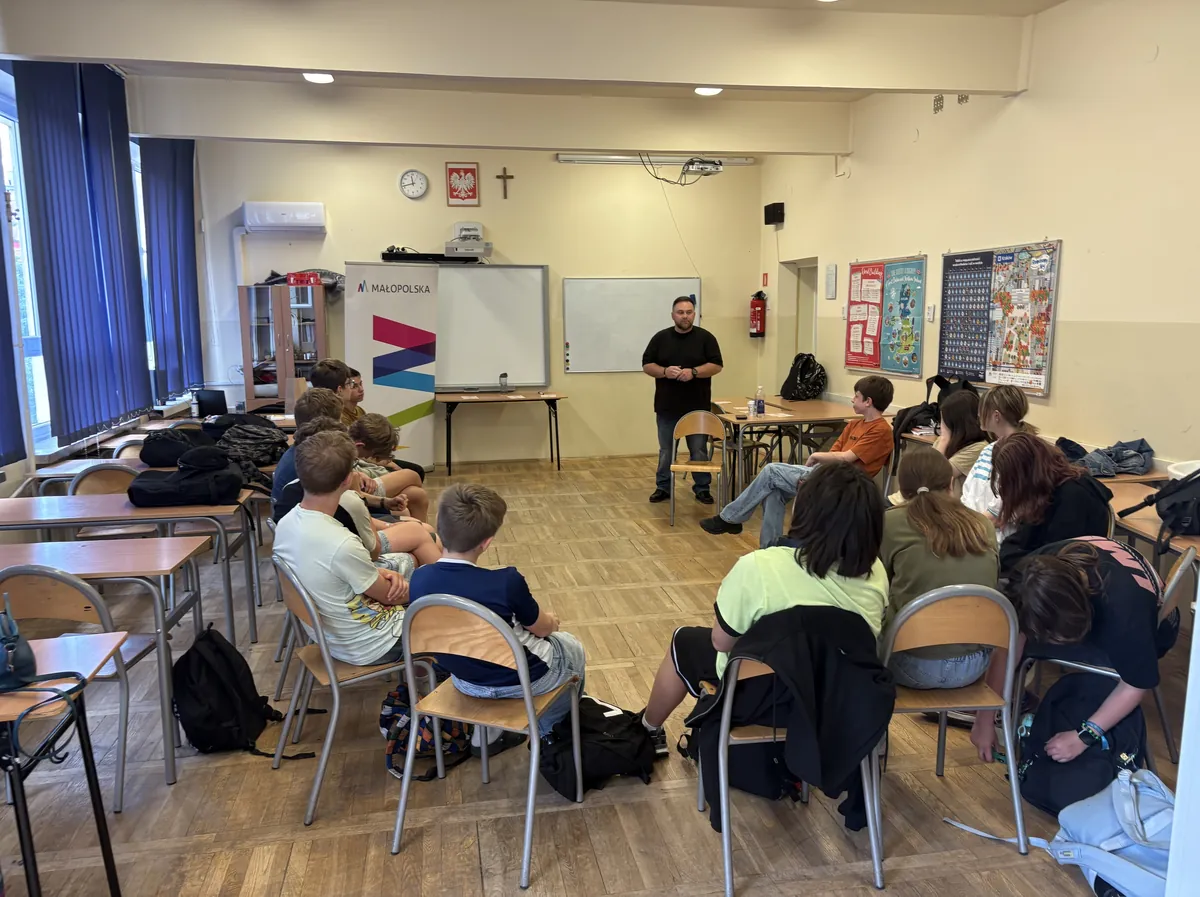
Classroom workshops on smartphones, bullying, stress and asking for help. Plus training for the teaching staff and a meeting for parents, for example on parents' evening.
Who forPupils, teachers, parents
Programme detailsAfter school
Strefa Rozwoju
Afternoon sessions at your school: hands-on physics and chemistry for grades 3–6, dance, basketball and clay. Parents sign their children up, and we provide the instructors and materials.
Who forGrades 2–8, depending on the activity
Session detailsStrefa Rozwoju · 90-minute workshop
The Magical World of Physics and Construction
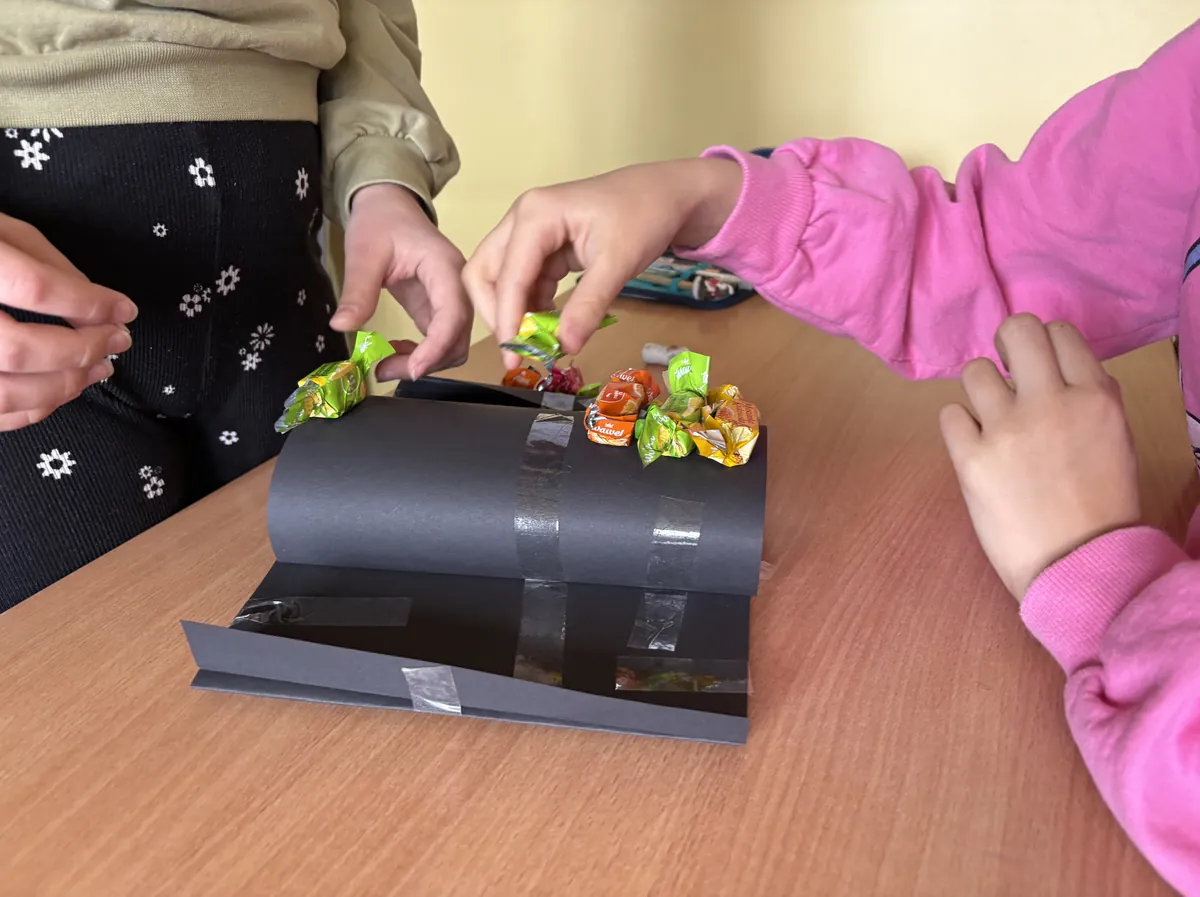
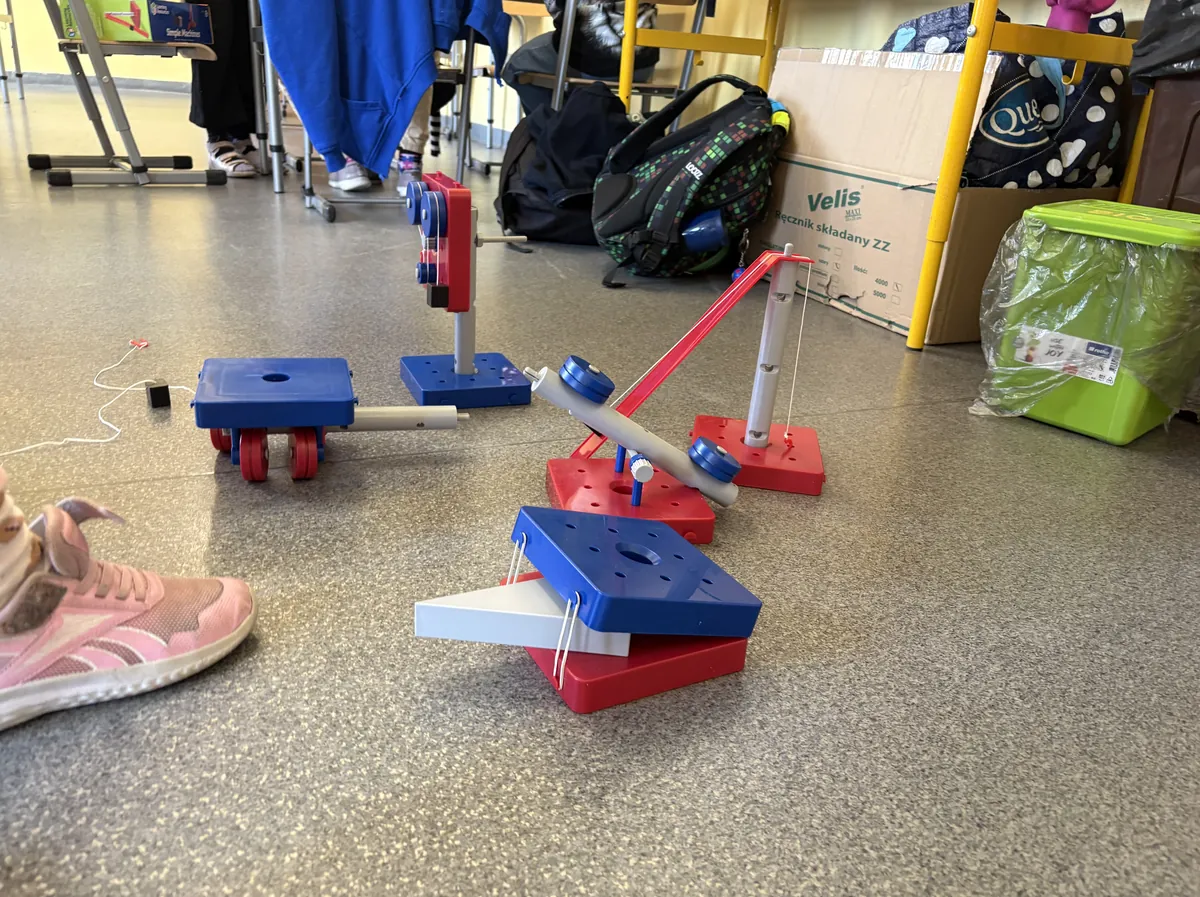
No desks and no lecture. Children spin on a swivel stool holding a bicycle wheel, each builds their own hovercraft from a CD and takes it home, and teams build a paper bridge that has to hold the most weights. They feel force, motion and friction for themselves.
The first workshops took place at Julian Tuwim Primary School No. 54 in Kraków.
We run the workshops as paid public-benefit activity, so you pay only what the session costs. Get in touch.
Time90 minutes, for one class
Ask about a date
Secondary school? We don't run regular sessions for secondary schools yet. Get in touch and we'll work something out together.
Schools we work with
We're there week in, week out, not just for special occasions.
Artur Grottger Primary School No. 106 in Kraków
Mali Ratownicy, prevention and Strefa Rozwoju
Władysław Jagiełło Primary School No. 21 in Kraków
Mali Ratownicy at Jagiełło, Mali Alchemicy
Henryk Sienkiewicz Primary School No. 36 in Kraków
Mali and Młodzi Inżynierowie
Janusz Korczak Primary School in Starachowice
Młodzież i dzieci bez ryzyka, GirlsGetSET
For the school office and head teachers
Children's safety and the foundation's details.
Everyone running sessions has been checked against the Polish Sex Offenders Register and knows our Child Safeguarding Standards.
- KRS
- 0001139894
- NIP (tax ID)
- 6772518651
- REGON (statistical number)
- 540245812
- Registered office
- Al. Artura Grottgera 3/66, 30-035 Kraków
- Public benefit organisation (OPP) status
- Not yet
Questions
Questions head teachers ask most often.
How much does the programme cost the school?
It depends on how it's funded. With a company partner or a local government grant, the sessions are free for the school. Without outside funding, we run them at cost, paid from the school's budget or by the parents' council.
What is paid public benefit activity?
It's the foundation's statutory activity, for which we charge a fee no higher than the cost of the sessions. That's what Article 9 of the Polish Act on Public Benefit Activity and Volunteering says. We don't make money from it.
What does the school do when there's a grant?
It agrees to take part, provides a room and a timetable, and after the sessions issues a certificate with the number of pupils. We prepare the application, the accounts and the report.
How do we sign our school up?
Email kontakt@fundacjavibe.org or call +48 609 021 627. Tell us how many classes you have and which programme you're interested in.
Where do you work?
In Kraków and Małopolska, and in Starachowice in the Świętokrzyskie region.
Does a teacher have to prepare the sessions?
No. We provide the programme, the instructors and the materials. A teacher is welcome to sit in.
Let's plan sessions at your school.
Write a few sentences about your school. We'll suggest a programme and a funding line.